
 English
  Deutsch
 Français
 Русский
 Español
 Português (Brasil)
 Bahasa Melayu
 Bahasa Indonesia
 한국어
한국어 Nederlands
 Tiếng Việt
 العربية
What Makes a Cosmetic Formula Stable? A Practical Guide for Beauty Brands
What Makes a Cosmetic Formula Stable? A Practical Guide for Beauty Brands
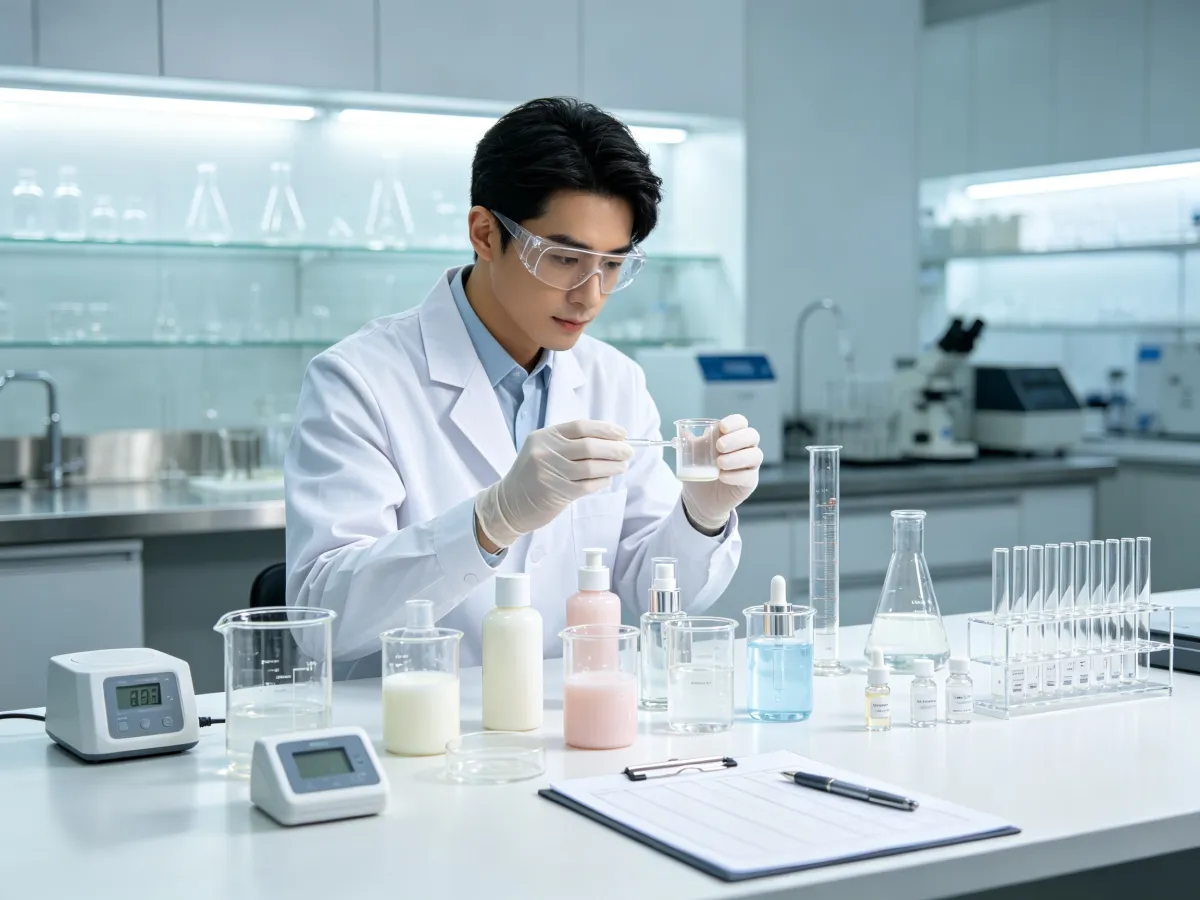
A cosmetic product can look perfect when the first sample is made, but that does not necessarily mean the formula is ready for production.
A product needs to remain within its intended specifications during storage and use. Changes in color, odor, viscosity, separation or appearance can indicate that the formulation requires further development.
This is why formula stability is an important part of cosmetic product development.
Stability is not simply a laboratory term. It is directly connected to product quality, packaging, consumer experience and the practical life of a cosmetic product.
What Does Formula Stability Mean?
In simple terms, a stable cosmetic formula should maintain its expected characteristics over time under appropriate storage conditions.
Depending on the product, these characteristics may include:
Appearance
Color
Odor
Texture
Viscosity
Phase structure
pH
Packaging compatibility
The exact parameters depend on the type of cosmetic product.
A liquid cleanser and an emulsion cream will not necessarily require exactly the same evaluation.
Why Can a Cosmetic Formula Change Over Time?
Cosmetic formulas contain multiple components that can respond to their environment.
Temperature, light, oxygen, humidity and time can all influence a product.
Some ingredients may be sensitive to environmental conditions.
Emulsions can also experience physical changes if the formulation is not sufficiently stable.
This is why a product that looks good immediately after production may behave differently after storage.
Temperature Can Reveal Problems
Temperature is one of the important factors considered during product testing.
A formula may be exposed to different temperatures during transportation and storage.
For internationally sold cosmetics, this becomes particularly relevant.
Products may travel long distances before reaching the final customer.
Testing under appropriate conditions can help identify potential problems before large-scale production.
The objective is not simply to make a product survive an extreme artificial environment. It is to understand how the formulation behaves under relevant conditions and identify weaknesses that may require improvement.
What Happens When an Emulsion Is Unstable?
Many skincare products are emulsions containing water and oil phases.
A well-developed emulsion needs to maintain an appropriate structure.
If the system becomes unstable, visible changes can occur.
For example, a product may show:
Separation
Changes in viscosity
Changes in appearance
Water release
Texture changes
These problems can affect both the appearance and usability of the product.
The solution depends on the cause.
It may involve adjusting the emulsification system, ingredient ratios, processing conditions or other aspects of the formulation.
pH Can Also Be Important
pH can influence the performance and stability of certain cosmetic formulations.
It can affect ingredient compatibility, preservation systems and the overall characteristics of a product.
The appropriate pH range depends on the formulation and its intended use.
Therefore, there is no single “perfect pH” for every cosmetic product.
A formulation specialist needs to consider the complete system.
Preservative Systems Matter
Products containing water can require protection against microbial contamination.
A suitable preservation system is therefore an important part of many cosmetic formulations.
However, preservation is not simply about choosing one ingredient and adding it to the formula.
The effectiveness of a preservation system can depend on the formulation environment, packaging, pH and other factors.
Appropriate testing is needed to evaluate whether the system performs as intended.
Packaging and Stability Are Connected
A stable formula can still encounter problems if the packaging is unsuitable.
For example, exposure to air or light may affect certain products.
The dispensing system can also influence how the product is exposed to the external environment during use.
This is why packaging compatibility should be considered during product development rather than treated as a completely separate decision at the end.
For some products, an airless container may be considered. For others, a pump, tube or different package may be more appropriate.
The correct choice depends on the formula and product requirements.
Stability Testing Is Not the Same as Waiting for Years
Brands sometimes imagine that the only way to understand stability is to wait until the product reaches the end of its intended shelf life.
In practice, product development can use controlled testing conditions to obtain useful information within a shorter development period.
Different testing approaches can help evaluate how a formula responds to temperature and other environmental factors.
The exact testing program depends on the product, market and development requirements.
Stability Problems Are Easier to Solve Earlier
If a problem is discovered during early sample development, the formulation can usually be adjusted before production.
If the same issue appears after a large production run, the consequences can be much more complicated.
This is one reason sampling and testing are valuable stages of cosmetic product development.
A sample is not merely a demonstration of what the final product might look like.
It is also an opportunity to identify weaknesses.
What Should Brands Watch During Testing?
Even without laboratory equipment, brands evaluating samples can record practical observations.
For example:
Appearance: Has the color changed?
Texture: Does the product remain consistent?
Odor: Has the fragrance or odor changed?
Application: Does it spread and absorb as expected?
Packaging: Does the dispenser continue to work properly?
These observations do not replace professional testing, but they can help identify issues that deserve further investigation.
FAQ
Does every cosmetic product need the same stability tests?
No. Testing should be appropriate for the product type, formulation, packaging and intended market.
Can packaging affect formula stability?
Yes. The packaging can influence exposure to air, light and other environmental factors and may also affect product dispensing.
Why does a cream sometimes separate?
Separation can have multiple causes related to the formulation structure, ingredient balance or processing conditions.
Can stability problems be fixed?
Often they can be addressed through formulation or packaging adjustments, but the appropriate solution depends on the cause of the problem.
Formula stability is one of those subjects that may not be visible to consumers when everything goes well.
But when stability is overlooked, problems can become obvious very quickly.
For brands developing skincare and personal care products, stability should therefore be considered from the beginning alongside formulation, packaging and manufacturing.
A good cosmetic formula is not only attractive when it is first made. It should also be designed to remain consistent throughout its intended product life.